If you’re a small business owner trying to grow your online presence, you’ve probably heard both terms thrown around: “digital marketing” and “performance marketing.” But are they the same thing? And more importantly—which one should you be investing in?
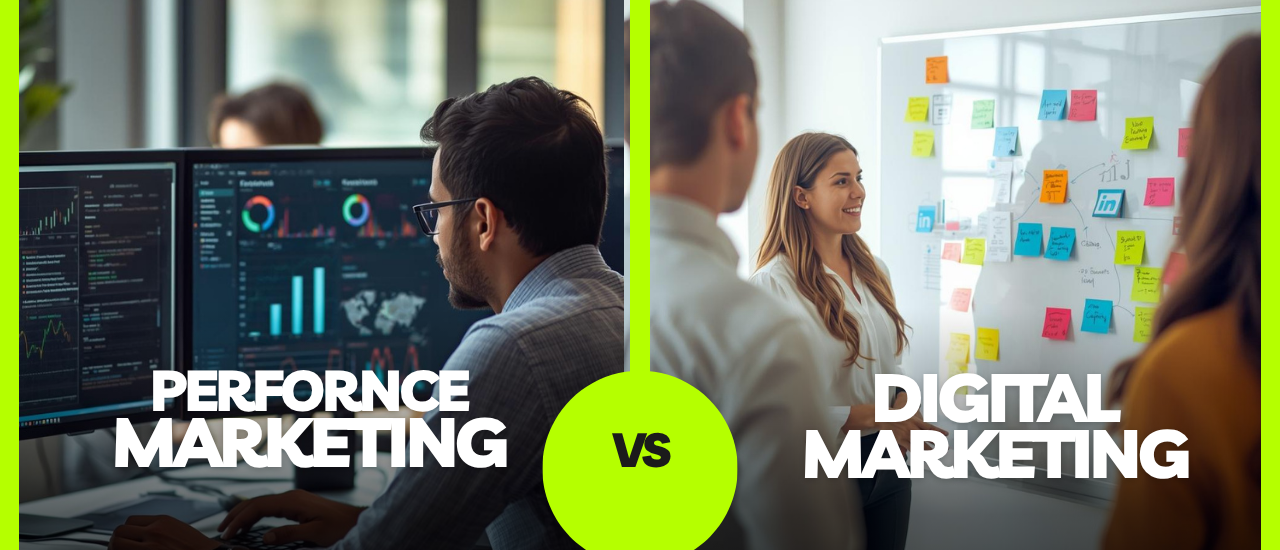
The real question: What’s the difference between performance marketing vs digital marketing?
The short answer: they’re related but different. Let me break it down for you in plain language.
What is Digital Marketing?
Digital marketing is the umbrella term for all marketing activities that happen online. It includes everything you do to reach customers through digital channels.
When we talk about performance marketing vs digital marketing, it’s important to understand that digital marketing is the broader category. Think of it like this: Digital marketing is any marketing activity that uses the internet and digital devices.
Common types of digital marketing include:
- Social Media Marketing – Creating content on Instagram, Facebook, LinkedIn, TikTok, etc.
- Content Marketing – Writing blogs, creating videos, publishing guides (like this one!)
- Email Marketing – Sending newsletters and promotional emails to your subscriber list
- Search Engine Optimization (SEO) – Optimizing your website so it ranks higher on Google
- Paid Advertising – Google Ads, Facebook Ads, Instagram Ads, LinkedIn Ads
- Influencer Marketing – Partnering with people who have large online followings
- Video Marketing – YouTube videos, reels, shorts, webinars
The goal of digital marketing is broad: Build brand awareness, engage your audience, establish authority, and yes—generate leads and sales. But not every digital marketing activity directly ties to a specific business result.
What is Performance Marketing?
Performance marketing vs digital marketing – this is where things get specific and measurable.
Performance marketing is more focused and results-driven.
In performance marketing, you only pay when something specific happens—a click, a lead, a sale, a form submission. It’s laser-focused on measurable results.
Common performance marketing channels:
- Pay-Per-Click (PPC) Advertising – Google Ads where you pay per click
- Cost-Per-Lead (CPL) – Facebook Lead Ads, LinkedIn Lead Generation
- Cost-Per-Action (CPA) – Pay only when someone completes a specific action (purchase, download, signup)
- Affiliate Marketing – Pay commissions only for actual sales
- Retargeting/Remarketing – Show ads to people who already visited your site and pay when they convert
The goal of performance marketing is laser-specific: Drive measurable actions and track your return on investment (ROI) precisely.
When comparing performance marketing vs digital marketing, remember that performance marketing is like having a very specific job with measurable outcomes—you know exactly what you’re paying for and what results you’re getting.
(Want to dive deeper? Read this detailed guide on digital marketing vs performance marketing)
The Key Differences (Simple Table)
| Aspect | Digital Marketing | Performance Marketing |
| Scope | Broad, umbrella term | Specific, results-focused |
| Goal | Brand awareness, engagement, relationships | Direct results: clicks, leads, sales |
| Payment Model | Fixed budget or CPM (cost per thousand impressions) | CPC, CPA, CPL (pay for results) |
| Measurement | Harder to track ROI | ROI is tracked and measured precisely |
| Timeline | Long-term brand building | Often short-term, immediate results |
| Examples | Social media posts, blogs, email lists | Google Ads, retargeting, affiliate programs |
A Real-World Example
Let’s say you own a fitness coaching business in Siwan.
Digital Marketing Approach:
- Post workout tips on Instagram every day (content marketing)
- Write a blog about “5 Myths About Weight Loss” (SEO + content)
- Email your newsletter to 500 subscribers with healthy recipes (email marketing)
- Partner with a fitness influencer to feature your coaching (influencer marketing)
Result: More visibility, more followers, more brand recognition. But you’re not directly charging for these activities or measuring immediate sales.
Performance Marketing Approach:
- Run Google Ads targeting “fitness coach near me” and pay only when someone clicks (PPC)
- Run Facebook Lead Ads where you pay only when someone fills out a form (CPL)
- Create a retargeting campaign showing ads to people who visited your website but didn’t sign up (CPA)
- Set up an affiliate program: Pay commission only when someone actually books a coaching session
Result: Every rupee is tracked. You know exactly how much you spent and how many clients you got.
Which One Should You Choose?
Performance marketing vs digital marketing – the answer depends on where your business is at.
Choose Digital Marketing if:
- You’re building a new brand and nobody knows about you yet
- You have a long sales cycle (B2B businesses)
- You want to establish yourself as an expert in your field
- You have patience and are thinking long-term
- Your budget is limited and you can create content yourself
Choose Performance Marketing if:
- You want immediate results and sales
- You have a clear product/service to sell
- You can track conversions and measure ROI
- You’re willing to invest money to see direct returns
- You need to prove the value of your marketing quickly
The Truth: You Probably Need Both
Here’s what the performance marketing vs digital marketing debate really comes down to: they’re not an either-or choice.
Most successful small businesses do this:
Layer 1 (Foundation): Use digital marketing to build your brand and authority.
- Create valuable blog content
- Build your email list
- Post consistently on social media
- Establish trust with your audience
Layer 2 (Acceleration): Use performance marketing to convert interested people into customers.
- Run ads to your warm audience
- Retarget website visitors
- Create lead generation campaigns
- Optimize for conversions
Think of it like a funnel:
Digital Marketing → Awareness → Interest → Consideration
↓
Performance Marketing → Action (Sale/Lead)
Getting Started
If you’re just starting out, I’d recommend:
- First 2 months: Focus on digital marketing. Create good content, build your presence, gather an audience.
- Month 3 onwards: Add performance marketing. Once you have some traffic and audience, use paid ads and retargeting to convert them.
- Continuously: Keep investing in both. Digital marketing keeps you visible; performance marketing keeps you profitable.
Pro Tip: If you’re unsure where to start or how to balance both approaches, that’s where professional agencies like TalkTech help. We analyze your business, goals, and budget to create a customized roadmap that works.
The Bottom Line
When it comes to performance marketing vs digital marketing, here’s what you need to know:
- Digital Marketing = The complete online strategy (broad)
- Performance Marketing = The part that directly drives sales and leads (specific)
They’re not competitors—they’re partners. Digital marketing gets people interested. Performance marketing turns interest into action.
For small business owners in Siwan and beyond, the best approach is to understand the difference between performance marketing vs digital marketing, then master the basics of digital marketing first, then layer in performance marketing strategies as you grow.
Ready to Boost Your Business?
This is where TalkTech comes in. We specialize in building balanced marketing strategies that combine both digital marketing and performance marketing to maximize your ROI. We understand the nuances of performance marketing vs digital marketing and know exactly how to deploy both strategies for your specific business needs.
Whether you need:
- A complete digital marketing strategy to build your brand
- Performance marketing campaigns that convert
- Or a balanced combination of both approaches
Contact TalkTech Today and let’s create a marketing strategy that actually works for your business. We’ve helped small businesses in Bihar and across India grow their online presence and generate real results.
Your next customer is waiting. Let’s find them together.
TalkTech – Your Digital Marketing Partner for Growth